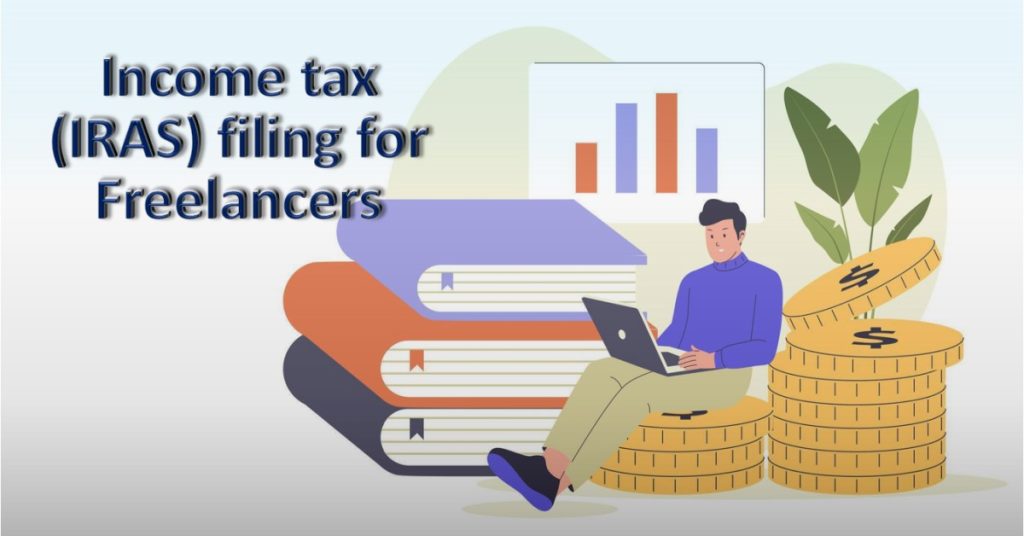
You finish a freelance project. The client transfers S$2,000. You smile. Then you remember: tax season is coming.
If you are new to freelancing in Singapore, the tax rules can feel confusing. You are not an employee, so you do not get an automatic IR8A form. You must declare your own income, track expenses, and know which forms to use.
This guide walks you through the entire process step by step. By the end, you will know exactly how to file your taxes correctly, claim deductions you deserve, and avoid penalties.
Time‑Sensitive Information (Please Verify Annually)
The following details are updated each tax year. Always check official IRAS and CPF websites for the current Year of Assessment (YA).
| Item | Current Value (for the ongoing YA) |
|---|---|
| Year of Assessment (YA) | The YA covers income earned in the previous calendar year. Filing typically opens 1 March. |
| E‑Filing Deadline | Usually 18 April (check IRAS for exact date). |
| Income Threshold (must file if) | Total annual income > S$22,000 OR self‑employment net profit > S$6,000. |
| Form B1 Revenue Threshold | Revenue ≤ S$200,000 → use 2‑Line Statement. |
| CPF Annual Contribution Limit | For YA 2025 it was S$37,740; check CPF Board for current limit. |
| Special Tax Rebate | A one‑off rebate may apply for specific YAs (e.g., YA 2025 had a 60% rebate capped at S$200). Check IRAS for current year. |
Always refer to the official IRAS website (
iras.gov.sg) and myTax Portal for the most up‑to‑date figures and deadlines.
What You Will Learn
- Whether you are considered a “self‑employed person” (SEP) by IRAS
- The filing thresholds – do you need to file at all?
- Which tax form to use: Form B or Form B1
- Key deadlines (and where to find current ones)
- How to keep proper records (and why it matters)
- Allowable business expenses you can claim
- CPF relief for self‑employed persons
- Other tax reliefs that may apply
- Common filing mistakes and how to avoid them
- Step‑by‑step e‑Filing instructions
Are You a Self‑Employed Person (SEP)?
Before you can file, you need to know how IRAS classifies you. According to IRAS, you are a self‑employed person if you earn a living by carrying on a trade, business, profession or vocation. This includes freelancers, commission agents, private tutors, hawkers, ride‑hailing drivers, and delivery riders. Source: Am I a self-employed person?
| Self‑Employed Person (SEP) | Employee |
|---|---|
| Earns income from trade, business or profession | Works under a contract of service |
| Provides services to multiple clients | Receives a fixed salary |
| Controls own work methods and schedule | Employer controls work hours |
| Bears the risk of business loss and profit | Employer makes CPF contributions |
If you are a freelancer, you are an SEP. You must declare your freelance income under “Trade, Business, Profession or Vocation” in your tax return – not as employment income.
Do You Need to File an Income Tax Return?
Not every freelancer is required to file. You must submit an Income Tax Return if any of the following applies to you in the preceding calendar year (check IRAS for the current year’s thresholds):
| Criteria | Typical Threshold |
|---|---|
| Total annual income | More than S$22,000 |
| Self‑employment net profit | Exceeds S$6,000 |
| Non‑resident deriving income from Singapore | Any amount |
If your income is below these thresholds, you do not need to file. However, if IRAS sends you a notification to file, you must submit a return even if your income is lower.
Even if you are under the No‑Filing Service (NFS), you should still log in to myTax Portal to verify your auto‑included information and check your tax relief claims.
Which Tax Form Should You Use?
Your total revenue (income before expenses) determines which form you need.
| Revenue Before Expenses | Form Required | What You Need to Submit |
|---|---|---|
| S$200,000 or less | Form B1 | 2‑Line Statement: (1) Revenue, (2) Adjusted Profit/Loss |
| More than S$200,000 | Form B | 4‑Line Statement: (1) Revenue, (2) Gross Profit/Loss, (3) Allowable Deductions, (4) Adjusted Profit/Loss |
Source: IRAS – Filing responsibilities of self‑employed persons
Most freelancers will use the simpler 2‑Line Statement (Form B1). You will find this section when you e‑File under “Trade, Business, Profession or Vocation”.
Key Deadlines (Check Current Year)
E‑Filing is the recommended method. The typical deadline is 18 April for the relevant Year of Assessment. Always verify the exact date on the IRAS website or myTax Portal.
Step‑by‑Step: How to e‑File Your Freelance Income Tax
Step 1: Log in to myTax Portal
Go to the official IRAS e‑Filing guide (search “IRAS e‑Filing guide” in your browser). Log in with your Singpass (or Singpass Foreign User Account). Select ‘Personal Tax’.
Step 2: Navigate to the Income Tax Return
Select “Individuals” > “File Income Tax Return”. You will see the tax return form.
Step 3: Declare Your Self‑Employment Income
Look for the section: “2. Trade, Business, Profession or Vocation” – not “Employment”. This is a common mistake. Freelancers must declare trade income here, not employment income.
- For revenue S$200,000 or less: complete the 2‑Line Statement – (1) Revenue, (2) Adjusted Profit/Loss.
- For revenue above S$200,000: complete the 4‑Line Statement – (1) Revenue, (2) Gross Profit/Loss, (3) Allowable Deductions, (4) Adjusted Profit/Loss.
Your Adjusted Profit/Loss is your net income after deducting allowable business expenses.
Step 4: Declare Other Income (if any)
Declare other sources of income (e.g., rental income, royalty, trust income) in the relevant sections.
Step 5: Claim Tax Reliefs
Navigate to the reliefs section and claim any tax reliefs you qualify for. Common reliefs for freelancers include:
- CPF Relief (for compulsory MediSave and voluntary CPF contributions)
- Earned Income Relief
- Course Fees Relief (check current eligibility)
- Parent Relief, SRS contributions, and others
Step 6: Review and Submit
Review all pre‑filled information carefully. Make sure your net trade income and relief claims are accurate. Then submit.
Keep Proper Records (IRAS Requires This)
As a self‑employed person, you are required to keep full and accurate records of all business transactions from the start, and retain them for at least 5 years.
| What to Keep | Why |
|---|---|
| Invoices issued to clients | Prove your revenue |
| Receipts for business purchases | Claim allowable expenses |
| Bank statements | Cross‑check income and expenses |
| Contracts or service agreements | Support your classification as an SEP |
IRAS does not accept estimates or improper records. If you are ever audited, you will need these documents to support your declared income and deductions.
If your annual revenue is S$500,000 or below, you can download IRAS’s Record Keeping Assistant to help maintain proper records.
Allowable Business Expenses You Can Claim
You can deduct expenses that are wholly and exclusively incurred in the production of your self‑employment income.
| Common Deductible Expenses | Notes |
|---|---|
| Equipment and software | Laptops, cameras, design software, etc. (capital allowance may apply for large purchases) |
| Home office costs | Proportionate share of utilities, internet, and property charges (if a dedicated workspace) |
| Transport | Grab, taxi, petrol, public transport for work purposes |
| Professional fees | Accounting fees, legal fees, software subscriptions |
| Marketing and advertising | Website hosting, ads, social media promotion |
| Training and courses | Approved courses relevant to your trade (Course Fees Relief may apply) |
| Supplies and materials | Stationery, printing, shipping costs |
A portion of your home utilities and internet can be claimed if you have a dedicated home office, but only the business‑use proportion. Keep detailed records.
Expenses must be reasonable and supported by receipts. Personal expenses are not deductible.
CPF Relief for Self‑Employed Persons
As a freelancer, you are required to make compulsory MediSave contributions. These are tax‑deductible.
| Contribution Type | Tax Relief Treatment |
|---|---|
| Compulsory MediSave contributions | Allowed in full (up to the contribution cap). Relief is allowed even if you have zero net trade income |
| Voluntary CPF contributions (to OA, SA, MA) | Capped at the lowest of: (1) 37% of net trade income, (2) CPF annual limit (varies each year), or (3) actual amount contributed |
Check the CPF Board’s website for the current annual limit. For YA 2025 it was S$37,740.
If you have no assessable net trade income for the year, you will still receive tax relief on your compulsory MediSave contributions. However, no CPF relief is allowed for voluntary contributions if net trade income is zero.
Other Tax Reliefs You May Qualify For
Beyond CPF relief, freelancers may also claim other personal tax reliefs, subject to the overall cap (currently S$80,000 per year; check IRAS for current limit).
| Relief | Who Qualifies |
|---|---|
| Earned Income Relief | All gainfully employed individuals, including self‑employed persons |
| Parent Relief | If you supported your parents, grandparents, parents‑in‑law or grandparents‑in‑law in the previous year |
| SRS Relief | If you made SRS contributions in the previous year |
| CPF Cash Top‑Up Relief | If you topped up your CPF Special Account or Retirement Account in the previous year |
| Course Fees Relief | Approved courses relevant to your trade (check current eligibility) |
| Life Insurance Relief | If you paid life insurance premiums in the previous year (subject to conditions) |
| NSman Relief | For eligible operationally‑ready NSmen |
A Real‑World Example

Situation: Sarah is a freelance graphic designer. In the previous calendar year, her gross revenue was S$60,000. Her allowable business expenses (software subscriptions, home office costs, marketing, equipment) total up S$15,000. Her net trade income (adjusted profit) is S$45,000. She also made compulsory MediSave contributions of S$4,200 (full tax relief) and S$1,000 voluntary CPF contributions (subject to the 37% cap). She has no other income.
| Step | Calculation |
|---|---|
| Gross revenue | S$60,000 |
| Less: allowable business expenses | – S$15,000 |
| Net trade income (Adjusted Profit) | S$45,000 |
| Less: CPF relief (compulsory + capped voluntary) | (– S$4,200) + (- S$1,000) = – S$5,200 CPF annual limit: 0.37 x S$45,000 = S$16,650 (but capped at actual contribution, which is S$1,000 in this case) |
| Chargeable income | S$45,000 – S$5,200 = S$39,800 |
| Estimated tax (after progressive rates) | Varies by year (use IRAS tax calculator) As per progressive tax rates (2025), her tax payable is roughly $550 |
Sarah files Form B1 (2‑Line Statement) by the annual deadline. She keeps her receipts and invoices in a folder for 5 years.
Common Filing Mistakes to Avoid
| Mistake | Correct Way |
|---|---|
| Declaring freelance income as “Employment Income” | Declare under “Trade, Business, Profession or Vocation” |
| Not filing because your organisation submitted your income | You must still file unless you receive an SMS NFS notification |
| Claiming personal expenses as business deductions | Claim only expenses incurred wholly for work |
| Not keeping receipts | Keep records for at least 5 years |
| Missing the filing deadline | Set a calendar reminder for March each year |
| Assuming zero tax means you do not need to file | Check the filing thresholds above |
My Take (Finance Mojito Style)
Having reviewed the IRAS guidelines, the most important thing for freelancers is not to panic. The forms look intimidating, but the process is straightforward once you understand the logic.
Two things will save you the most headache: keep proper records and file on time. IRAS provides clear e‑Filing guides and even a Record Keeping Assistant for small businesses.
If your freelance income is still small, do not assume you can skip filing. Check the thresholds. If you are unsure, log in to myTax Portal and verify your status.
Filing your taxes correctly also helps you later – for example, when you apply for loans, visas, or housing. Your tax returns are proof of your income.
Take one hour during the filing season (March to April) to gather your receipts, log in to myTax Portal, and file. Future you will thank you.
Here is to your financial clarity. One sip at a time. 🍸
Your 30‑Day Action Plan
| Week | Action |
|---|---|
| Week 1 | Gather all invoices, receipts, and bank statements for the previous calendar year. |
| Week 2 | Calculate your gross revenue and allowable business expenses. Estimate your net trade income. |
| Week 3 | Log in to myTax Portal. Check whether your income is pre‑filled (some platforms may submit income data to IRAS). |
| Week 4 | File your return before the annual deadline (usually mid‑April). Keep a copy of the acknowledgement. |
Related Guides
- How to Build a 6‑Month Emergency Fund – A safety net gives you peace of mind as a freelancer.
- The Psychology of Debt – Managing irregular freelance income starts with good money habits.
- CPF vs SRS: Which Gives More Tax Relief? – Retirement planning complements freelancing.
Before You Go
Filing taxes as a freelancer is not difficult if you prepare early. Keep your records clean, know your filing deadlines, and claim only what you are entitled to.
Next up: How to File Singapore Income Tax (IRAS) for Freelancers – A Complete Guide

Discover more from Finance Mojito
Subscribe to get the latest posts sent to your email.