You already own a home. Now you are thinking of buying a second property – for investment, for your child, or as a weekend retreat.
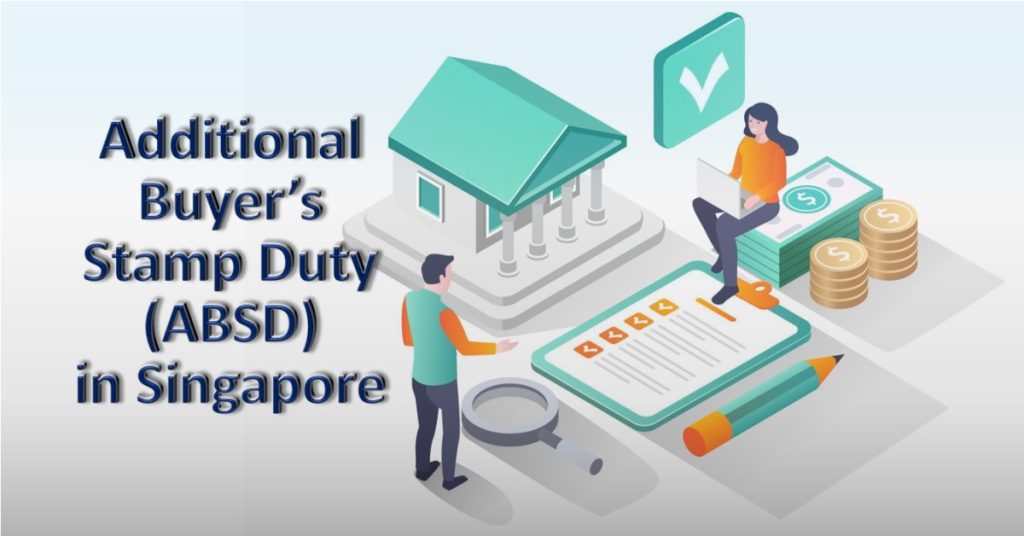
Then you hear about Additional Buyer’s Stamp Duty (ABSD). For a Singapore Citizen buying a second property, ABSD is 20% of the purchase price. On a S$1.8 million condo, that’s S$360,000 extra tax.
Can you legally avoid this tax? The answer depends on your goal:
- If you want to upgrade (replace your current home with a new one, ending with one property), yes – you can avoid ABSD.
- If you want to keep your first home and add a second property (own two at once), the only legal way is to plan years in advance using the Essential Occupier strategy.
This guide explains what works, what doesn’t, and how to plan.
What You Will Learn
- Current ABSD rates for Singaporeans, PRs, and foreigners
- The two safe methods for upgrading (ending with one property)
- The Essential Occupier strategy – the only way to keep your HDB and buy a private property without ABSD
- What no longer works (HDB decoupling, 99‑to‑1 schemes)
- A real‑world example of each strategy
- Common mistakes that can cost you the refund
Current ABSD Rates (Residential Property)
These rates apply to purchases on or after 27 April 2023. Always check the IRAS website for the latest rates.
| Buyer Profile | ABSD on First Property | ABSD on Second Property | ABSD on Third & Subsequent |
|---|---|---|---|
| Singapore Citizen (SC) | 0% | 20% | 30% |
| Singapore Permanent Resident (PR) | 5% | 30% | 35% |
| Foreigner | 60% | 60% | 60% |
Source: IRAS Additional Buyer’s Stamp Duty (ABSD)
Part 1: Upgrading – Replacing Your Current Home (End with One Property)
These two strategies are for couples who want to sell their existing home and buy a new one. At the end, you own only one property. Both are completely legal and safe.
Strategy 1: Sell First, Then Buy (No ABSD Upfront)
How it works: Complete the sale of your existing property before you sign the Option to Purchase (OTP) for the new one. At the date of purchase, you own no property, so you are a “first‑time buyer” and pay 0% ABSD.
Pros: No ABSD paid upfront, no refund paperwork, no deadline risk.
Cons: May need temporary accommodation; could miss a dream home if it appears before you sell.
Strategy 2: Buy First, Then Sell Within 6 Months (ABSD Refund)
How it works: You pay the ABSD upfront when you buy the second property jointly with your spouse. Then you sell your first property within 6 months of the second property’s purchase date (or TOP/CSC for uncompleted properties). After the sale, you apply to IRAS for a full refund of the ABSD you paid.
Conditions (from IRAS):
- Both spouses are named as co‑purchasers of the second property.
- The first property is sold within 6 months (strict, no extensions).
- Application for refund is made within 6 months after the sale.
Pros: You can secure your dream home immediately without waiting for your existing property to sell.
Cons: You need sufficient cash to front the ABSD (e.g., S$360,000). If you miss the 6‑month deadline, you lose the refund.
Pro tip: Secure a buyer for your first property before committing to the second purchase. Then you can structure the sale and purchase to complete within days, avoiding the cash flow pressure.
Important: These Are for Upgrading Only
Both strategies require you to sell your first property. You cannot use them to keep your first home and add a second. If you want to own two properties at once, you need the Essential Occupier strategy (see Part 2).
Part 2: Accumulating – Keeping Your HDB and Buying a Private Property (Own Two at Once)
If you want to keep your HDB flat and buy a private property (e.g., a condo) without paying ABSD, the only legal way is to plan from the very beginning using the Essential Occupier scheme.
What Is an Essential Occupier?
When a married couple buys an HDB flat, HDB requires both spouses to be listed as either co‑owners or essential occupiers. An essential occupier has no legal ownership of the flat, cannot use CPF to pay for it, and cannot apply for an HDB loan. However, they must live in the flat for the entire 5‑year Minimum Occupation Period (MOP).
| Role | Ownership | CPF Usage | Loan Eligibility | MOP Requirement |
|---|---|---|---|---|
| Co‑owner | Yes | Yes | Yes | Must live in flat |
| Essential Occupier | No | No | No | Must live in flat for 5 years |
How It Helps You Avoid ABSD on a Second Property
If only one spouse is the co‑owner, the other spouse is an essential occupier with no legal property ownership. After the 5‑year MOP, the essential occupier is considered a first‑time buyer in the eyes of IRAS. They can buy a private property without paying ABSD – because legally, they do not own any property.

Example: Sarah and Alex buy an HDB flat. They decide to list Alex as the sole co‑owner and Sarah as the essential occupier.
Alex uses his CPF and income for the loan. Sarah lives in the flat for 5 years.
After the MOP, Sarah is property‑free. She buys a private condo as a first‑time buyer – 0% ABSD. The couple now owns two properties: the HDB (under Alex) and the condo (under Sarah).
Strict Conditions and Risks
| Condition | Why It Matters |
|---|---|
| 5‑year MOP lock‑in | The essential occupier cannot buy any property (private or HDB) during the first 5 years of owning the HDB flat. |
| Income used for loan | Only the co‑owner’s income is considered for the HDB mortgage. The essential occupier’s income cannot be used. |
| CPF cannot be used | The essential occupier cannot use their CPF savings for the HDB flat. All CPF contributions come from the co‑owner alone. |
| No short‑cut | You cannot convert a co‑owner to an essential occupier after purchase. This must be decided at the time of buying the HDB flat. |
Important: This strategy requires long‑term planning (5+ years). It is not a quick fix. Also, the essential occupier must genuinely live in the flat – HDB does not allow “phantom occupiers.”
Source: HDB – Essential Occupier Scheme
What Does NOT Work (Risky or Illegal)
| Method | Why It Does Not Work |
|---|---|
| Decoupling an HDB after purchase | HDB no longer allows voluntary transfer of ownership between spouses (except divorce or severe hardship). |
| “99‑to‑1” arrangements | Buying 99% under one name and 1% under the other, then later transferring the 99% to avoid ABSD, has been ruled by the Singapore High Court as tax evasion. |
| Using a relative as an Essential Occupier | HDB requires the essential occupier to be a spouse or immediate family member living in the flat. You cannot use a sibling or parent to “park” ownership. |
Comparison of Strategies by Goal
| Goal | Strategy | Feasibility | Time Horizon |
|---|---|---|---|
| Upgrade (replace home, end with one property) | Sell first, then buy | ✅ Safe | Weeks to months |
| Upgrade (replace home, end with one property) | Buy first, refund within 6 months | ✅ Safe (requires cash flow) | 6 months |
| Accumulate (keep HDB + buy private property) | Essential Occupier from start | ✅ Legal, but must plan when buying HDB | 5+ years |
| Accumulate (if you already own joint HDB) | No legal way to avoid ABSD | ❌ Not possible | – |
| Accumulate (using decoupling of private property) | Transfer ownership of private condo to one spouse, then other spouse buys second property | ✅ Works for private property (not HDB) | 1‑2 months (but pay BSD on transfer) |
The Strict 6‑Month Rule – Don’t Miss It
If you rely on the ABSD refund (buy first, then sell), the timeline is strict. IRAS does not grant extensions.
How to protect yourself:
- Secure a buyer for your first property before you commit to the second purchase.
- Build in a buffer – aim to complete the sale within 4‑5 months, not 6.
- Work with a conveyancing lawyer experienced in HDB or private property.
Real‑World Examples
Example 1: Upgrading (Sell First)
Alex and Sarah own a joint HDB. They want to buy a larger condo. They sell their HDB, complete the sale, and then buy the condo. ABSD paid = $0.
Example 2: Upgrading (Buy First, Refund)
Alex and Sarah find their dream condo before selling their HDB. They pay 20% ABSD upfront (S$360,000on a S$1.8M condo). They sell their HDB within 5 months and apply for a refund. They get the full S$360,000 back. Net ABSD = $0.
Example 3: Accumulating (Essential Occupier)
At the time of buying their first HDB, Alex and Sarah list Alex as sole co‑owner and Sarah as essential occupier. After 5 years, Sarah buys a private condo under her own name. ABSD = $0. They now own two properties.
Common Mistakes to Avoid
| Mistake | Why It Hurts | Better Approach |
|---|---|---|
| Assuming you can decouple an HDB after purchase | HDB does not allow it (except divorce). | Use the Essential Occupier strategy from the start, or accept that you must pay ABSD or sell. |
| Using a “99‑to‑1” scheme | Courts have ruled it as tax evasion. | Never rely on artificial ownership splits. |
| Missing the 6‑month deadline | You lose the ABSD refund. | Secure a buyer before you buy. |
| Not consulting a lawyer | You may unintentionally violate tax laws. | Pay for professional advice – it is cheaper than a S$360,000 mistake. |
My Take (Finance Mojito Style)
Avoiding ABSD on a second property is possible, but you must be clear about your goal.
- If you are upgrading (selling your current home), use the sell‑first or refund method. Both work and are safe.
- If you want to keep your HDB and buy a private property, the only legal way is to plan the Essential Occupier strategy from the very beginning when you buy your HDB. If you already own a joint HDB, you cannot avoid ABSD – you must either pay it or sell the HDB.
The old shortcuts (HDB decoupling, 99‑to‑1) no longer work and can land you in legal trouble. Plan early, consult professionals, and always leave a buffer for the 6‑month timeline.
Here is to your financial clarity. One sip at a time. 🍸
Your 30‑Day Action Plan
| Week | Action |
|---|---|
| Week 1 | If you own an HDB, check your flat’s MOP status. If you are still within 5 years, you cannot sell or transfer ownership easily. |
| Week 2 | If you are buying a new HDB, discuss with your spouse whether the Essential Occupier strategy makes sense for your long‑term plans. |
| Week 3 | If you are upgrading soon, calculate your cash flow for the ABSD refund strategy. Secure a buyer for your current property before you shop. |
| Week 4 | Consult a property lawyer to review your specific situation – especially before trying any ownership transfer. |
Related Guides
- How to Build a 6‑Month Emergency Fund – A safety net for property transactions.
- Best Robo-Advisors in Singapore (Endowus, Syfe, StashAway) – Alternative investment options.
- How to File Singapore Income Tax (IRAS) for Freelancers – Managing your tax profile before buying property.
Before You Go
Avoiding ABSD is not about finding a loophole – it is about following the legal rules and planning years ahead. Upgrading is straightforward. Accumulating (keeping two properties) requires the Essential Occupier strategy from day one of your HDB purchase. The old shortcuts no longer work and can be dangerous.
Next up: EPF Account 1 vs Account 2 – Withdrawal Rules & Strategies

Discover more from Finance Mojito
Subscribe to get the latest posts sent to your email.